


{ 356 B/C / 912 Fuel Pump}
{Porsche 356 / 912 fuel pump rebuilding}
Porsche part # 616 108 401 00
APG A. Pierburg Auto- und Luftfahrtgerätebau KG
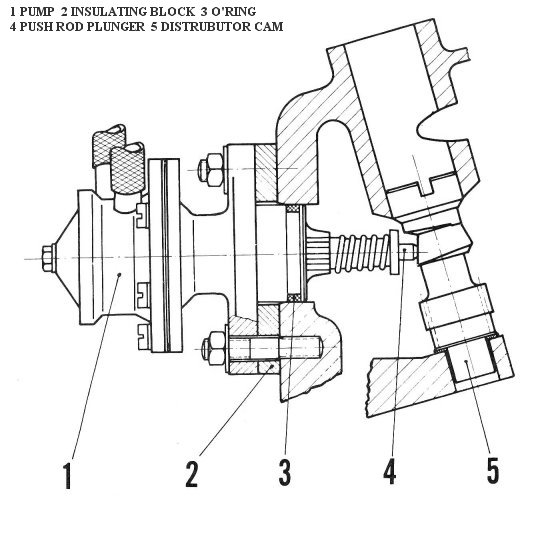
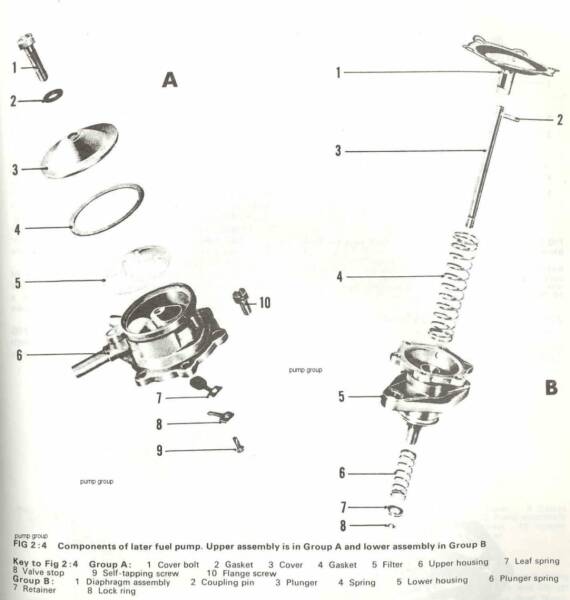
Fig 2:1 Exploded view
APG fuel pump for 356 late 'B / 'C / 912 1600 motors
Fig 2:2 Shows mounting of APG fuel pump on cross section of engine case.
Gaskets are not required as the O'ring seals the lower pump housing to the case. There are high and low oil holes in the lower housing to lubricate the plunger. A plunger shaft seal also in the lower housing makes sure the oil returns to crank case.
Description of operation
As shown in Fig 2:1, the APG pump operates as follows: driven by a plunger (push rod) from a cam on the distributor shaft, with the cam low, the plunger spring (lower spring) pulls down the push rod and the diaphragm which is coupled to it. Closing the discharge valve allows fuel to be pulled thru the suction valve. With the cam high, the plunger pushes the diaphragm up, closing the suction valve and forcing fuel out thru the discharge valve.
The push rod is coupled to a slot in the diaphragm assembly with a coupling pin. This allows for the disconnect of the push rod from diaphragm on the return stroke and provides for under travel of the diaphragm (the stroke of the push rod does not change, but the travel of the diaphragm does). Here again the DISCHARGE VALVE IS THE FUEL CHECK VALVE. The plunger is lubricated with engine oil via holes in the lower housing.
Again, as with the A' DVG pump, the actual push rod stroke is 4 mm. But, unlike the A' DVG pump, the APG pump has no need for adjustments ( spacer/gaskets ).
You may have noticed that the A' DVG pump works in reverse or " bass-ackwards "1 to the APG pump.
Some notable differences:
The suction valve is now a stainless steel reed valve. The discharge valve is now a non- serviceable item with a hard face phenoelic/fiber disc and hard aluminum seat pressed into the upper pump housing.
1, Harry Pellow from his Porsche Engines and the Future of the Human Race ( The ABC's and 912's of Porsche Engines )
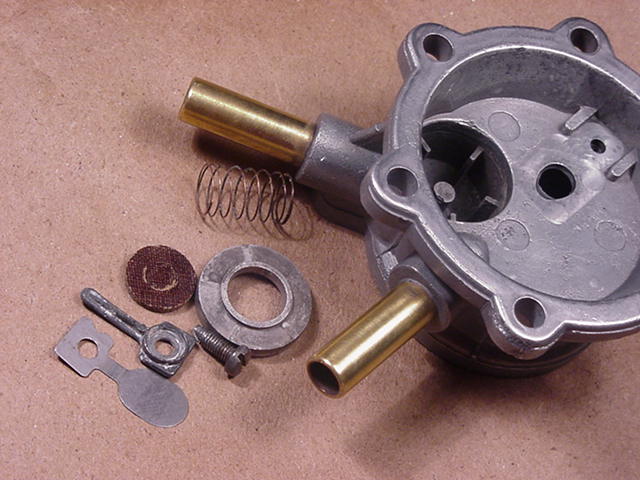
Upper housing. Showing, valve components and normally, not accessible discharge valve galley. Also note suction valve seat area that I have refaced.
This pump was in sorry condition ( water corrosion ), but after a final cleaning and rebuilding will function as new!

df 2025
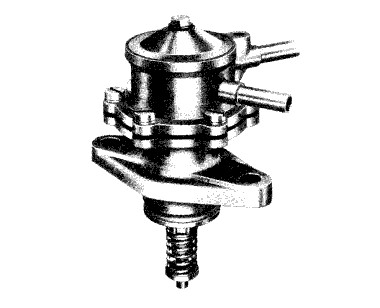
Repair / Restoration for the Porsche 356 (late B) / C/ 912 fuel pump.
The APG 356 / 912 FUEL PUMP
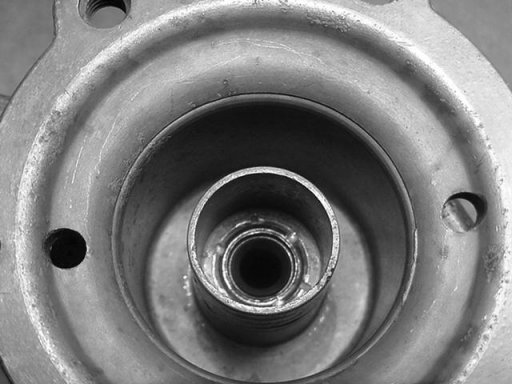
Lower housing. Showing shaft seal.
The plunger shaft seal is a normally non serviceable item. Should be replaced while rebuilding pump .
A. Pierburg Auto- und Luftfahrt-Gerätebau KG
Loosely translates: A. Pierburg Car and Aviation Equipment Mfg.
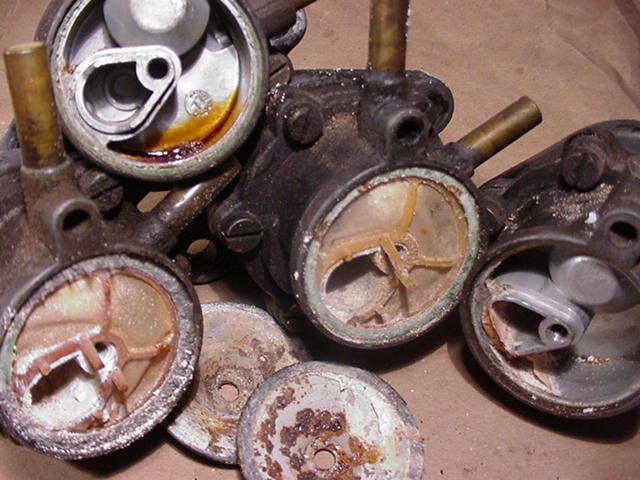
A sampling of APG pumps, just opened.
When was the last time your filter bowl was cleaned?
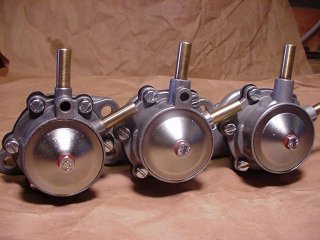
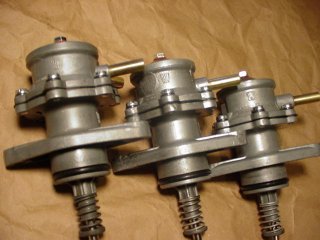
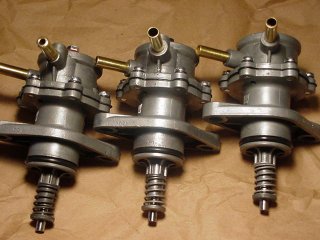
Rebuilt APG Fuel Pumps / Late style pump
Pix show production changes.
Examples from left to right: date code: 1964, 1966 & 1969.
Note changes in casting boss and tube thickness (bore) for brass inlet and outlet tube's.
Inner casting, valves, valve seat dimensions, and seal (exception, very early pumps had two piece graphite seal) remained the same over production years.
I queried several 356 repair shops about their experiences with these pumps as relating to the inlet / outlet, boss / bore changes.
Answers:
Some said the early pump boss is the one that leaks. Others said the later pump boss was the only one to leak. Some did not know there was a production change ( difference). Some felt the smaller tube pump would deliver less fuel. Others claimed no difference.
What I found surprised me.
A number of APG fuel pumps were bench tested full flow, (no restrictions) with fluid and 4 MM stroke. Repeated and averaged, all the pumps were within 10% of each other in the amount of liquid delivered, with the small bore pumps delivering equal or greater amount of fluid.
Was the change to thinner-walled brass tube a cost saving measure and the boss change to accommodate this tube?
My data base shows the small bore fitting pumps used from late 1962 B' cars through late 1964 C' cars irregardless of engine.
The large bore fitting pumps took over in late 1964 C' cars and continued through the 912 series.
If you would like your fuel pump info (# on casting & boss style) added to my data base, send me an Email.
Looking Inside
Fig 2:4
Fig 2:3
Fig 2:2
Examples of rebuilt pumps.
Fig 2:2, Fig 2:3 & Fig 2:4.These are examples of the pumps I am offering.
They are rebuilt with the currently available kits..
New: diaphragm, seal, o'ring, gaskets, hardware and replated top.
They are prepared same as my DVG pumps. including final leak and flow test.
Ready to install
Ideal for replacement or spare.
Rebuild your 356 or 912 fuel pump:
$275.00 + S/H
Notes: APG Fuel Pumps
A Different Animal.
Although used in the same interchangeable application (the 1600 motor), the DVG and APG pumps, both robust in design and adequate in providing fuel delivery, do it in unique ways.
As noted on my Home Page description of the DVG FUEL PUMP operation, the diaphragm spring determines the fuel delivery pressure (approximately 2.5 p.s.i., but generally no more than 3 p.s.i.). The DVG pump is is a self-regulating fuel pump with surge chamber.
By contrast the APG FUEL PUMP delivery pressure is determined by a balancing act between the diaphragm spring (long spring) and the plunger spring (short spring). The Diaphragm is driven by the plunger (push rod) and only disconnected on the down stroke of the push rod. In operation and at any fuel flow we have the push rod driven off of a cam on the distributor drive shaft, constantly tapping the diaphragm. Since liquids cannot compress, pulsing can occur and output pressure may increase above the normal delivery pressure of 2 p.s.i. / 3 p.s.i. to the order of 5 p.s.i. . This is not a problem in most cars.
Some carburetor manufactures, like Weber, recommend no more than 3.5 p.s.i. inlet pressure to their carburetors.
Fuel pressure pulsing can accelerate the wear of the carburetor float-needle-valve as well as cause bowl flooding.
Nipple Leaks. (a recent email)
My 1967 912 fuel pump is leaking out of the joint between the brass outlet nipple and the aluminum body of the pump which it is cast into. Can this be repaired?
(answer)
Yes, nipple leaks are not uncommon on the APG fuel pump. As part of my bench rebuilds all pumps are leak tested and nipple leaks repaired.
Fuel Pump pressure.
The APG pump in good repair and in normal operation can maintain 5" to 7" Hg vacuum at inlet and 2.4 PSI at outlet. 5" Hg converted to PSI = 2.4 PSI plus 2.4 PSI outlet, gives a delta P of 4.8 PSI. These are good numbers for a diaphragm that moves only some .5 mm.
I have randomly tested fuel pumps for pressure before disassembly. Results; inlet vacuum 3" to 4", outlet pressure 1 psi or less. Corrosion, valve wear, stiff and or cracked diaphragm all attribute to reduced fuel output and or pump failure.
Pierburg APG pumps for 356 late B', C ' & 912 1600 motors.
Porsche part # 616 108 401 00
Fuel Pump spacer.
The APG pump uses a phenoelic/fiber insulating spacer approximately 8 mm thick. Installed between the pump flange and motor case. See Fig 2:2 above and Pix below.
If the pump is installed without spacer, fuel pump damage will occur. Also damage may occur to the distributor shaft.
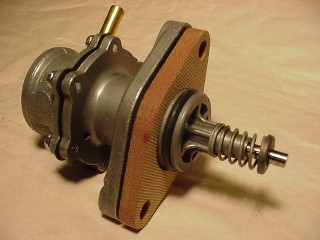
Pix shows APG fuel pump with insulating spacer and O'ring properly positioned below flange.
Inlet / Outlet nipples
The inlet tube is the lower tube (close to diaphragm), Outlet tube is upper tube (close to top).
Handling Nipples
When removing hoses from the inlet and outlet fittings. Handle with care. The thin brass tube is cast into a small boss in the upper housing and can become loose, this is a source of leaks. Also if you cut away the fuel hose take care as not to score the brass tube, this can become a leak problem later when reinstalled.
I have had to solder tube cracks and fill gouges with solder.
Late style Pump for Porsche 356 C /912
Late style Fuel Pump
Ethanol
The materials used in Fuel Pump Kit and in my rebuilt pumps are ethanol compatible, E-10, E-15 and E-85.


The APG pump is a semi-self-regulating fuel pump without surge chamber.
The installation of a fuel regulator with anti-surge capability will allow the fuel system to function in a reliable and predictable manner and may help some problem APG ( late style fuel pump) applications.
At right is an example of a regulator with surge chamber, that is currently available.
Brand New Part
Fuel Screen Kit. For 356 C/912 fuel pump (Late style pump)
Kit includes: New; screen, gasket and fiber washer. All parts are Ethanol compliant.
A must have for your annual fuel pump maintenance or carry as a spare in your travel kit.
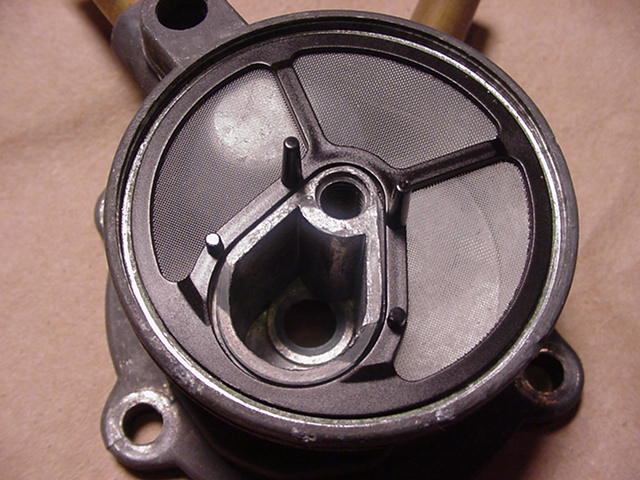
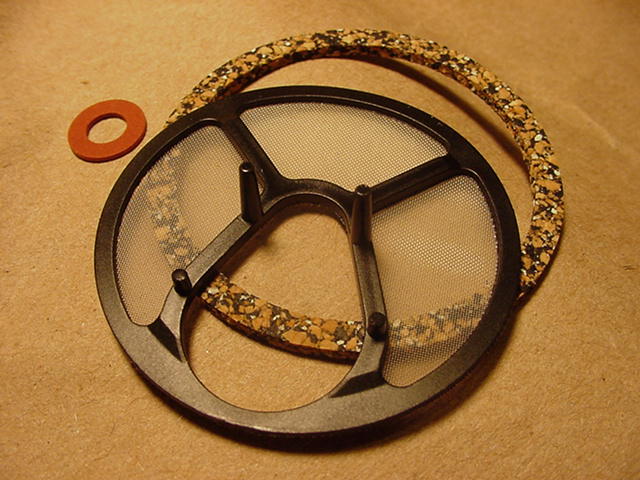

These are my parts.
Made in the USA
356 C/912 Fuel pump screen kit. Part # 616.108.904.100
Price $9.50 each kit
To order go to;
Services, Kits Parts Page
Technical notes:
Fuel filter is made of fuel grade Nylon 6/6.
Screen is Swiss made, Nitex fabric. 150 micron rating.
Injection molded, Addison Illinois, USA
Gasket is Cork/Nitrile, Military spec. SAE-AMS-C-6183, USA
Washer is vulcanized fiber compressed, USA
Also fits: VW 40 HP fuel pumps ( Made in Germany, Made in USA and Brosol- Brazilian )
Through-out the 60's and 70's, Pierburg used this basic fuel pump in a variety of applications
If it looks like it will fit your Early: Mercedes-Benz, Volkswagen, Volvo or Saab fuel pump, it will
Also fits BMW D7 & Cummings diesel lift pump and many other marine & generator diesel lift pump applications
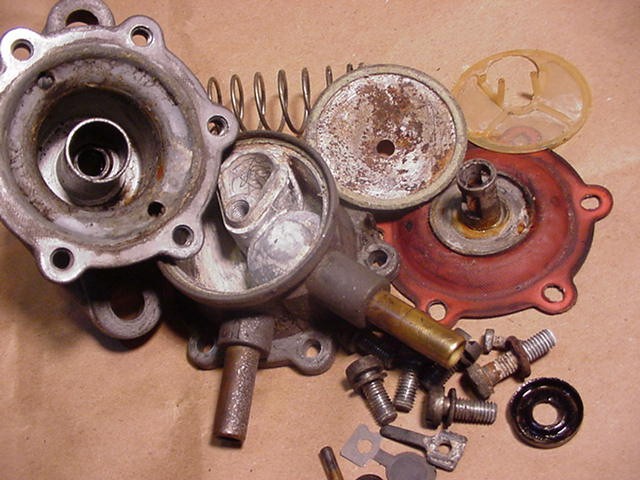
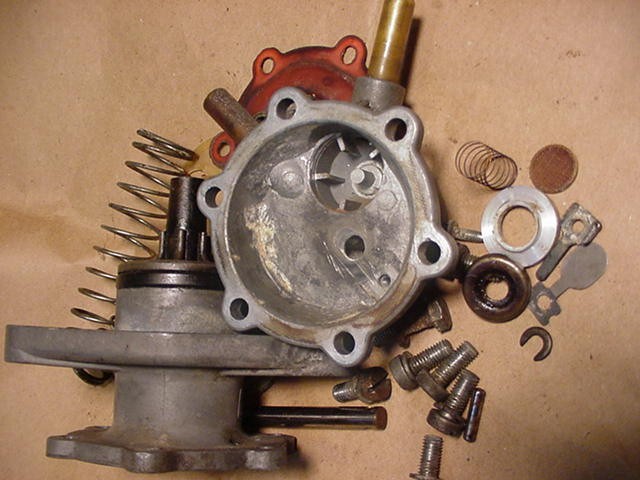
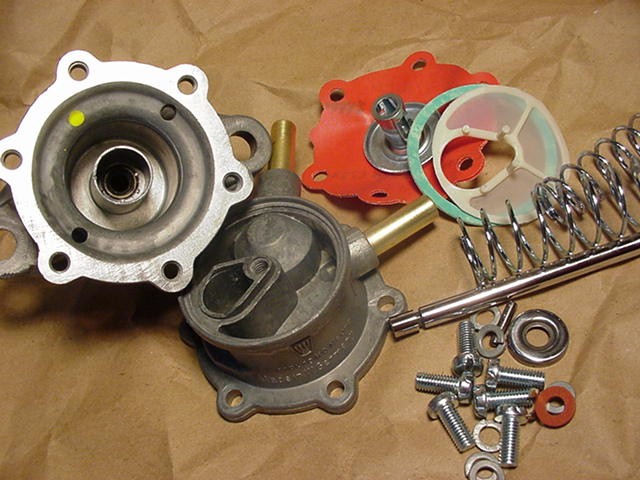
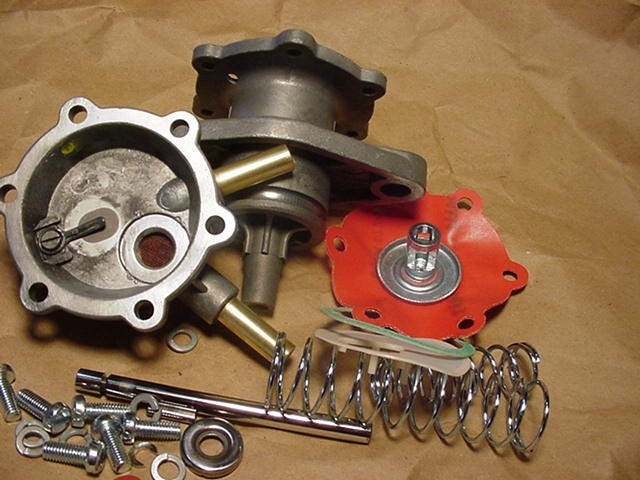
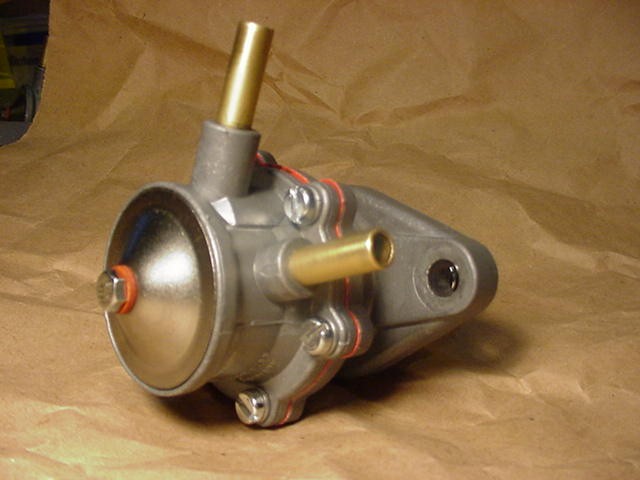
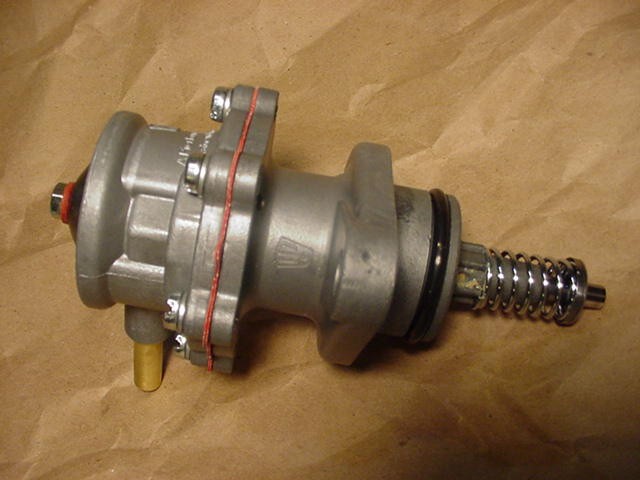
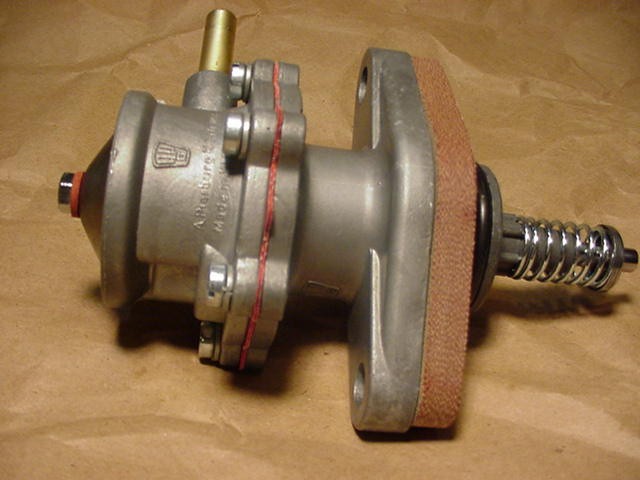
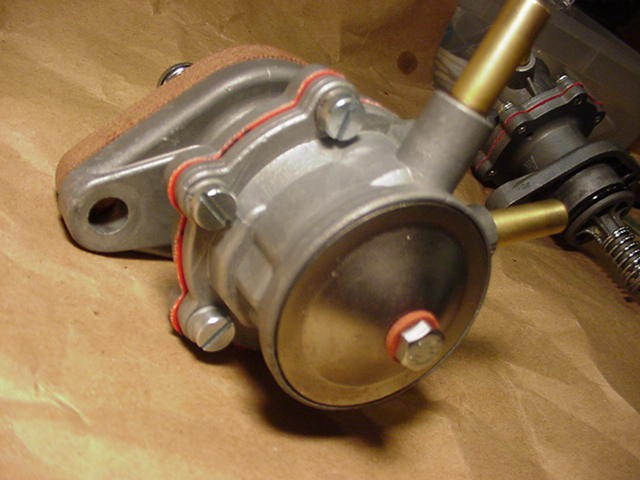
Recent Pix of rebuilt 356 C/912 fuel pumps
Before, During and After Pix
These are typical of the pix I send my customers to keep them up to date on rebuild
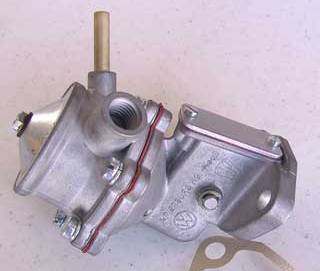
40 HP VW Fuel pump
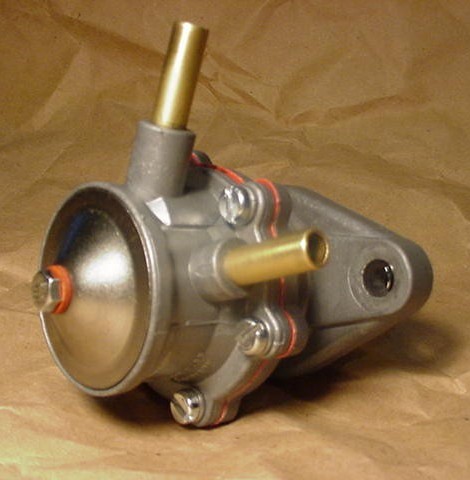
Porsche 356C/912 Fuel pump
Nice Fit

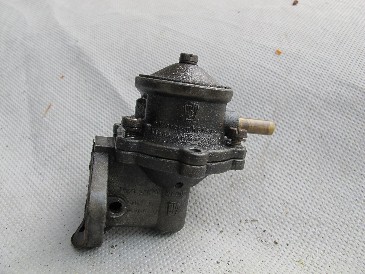
Benz, 220 & late 190 Fuel pump
To send me your fuel pump
Shipping Address:
Doug Feistamel
1415 S Ardmore Ave Unit 6316
Villa Park IL 60181-5842 USA
630.834.2292
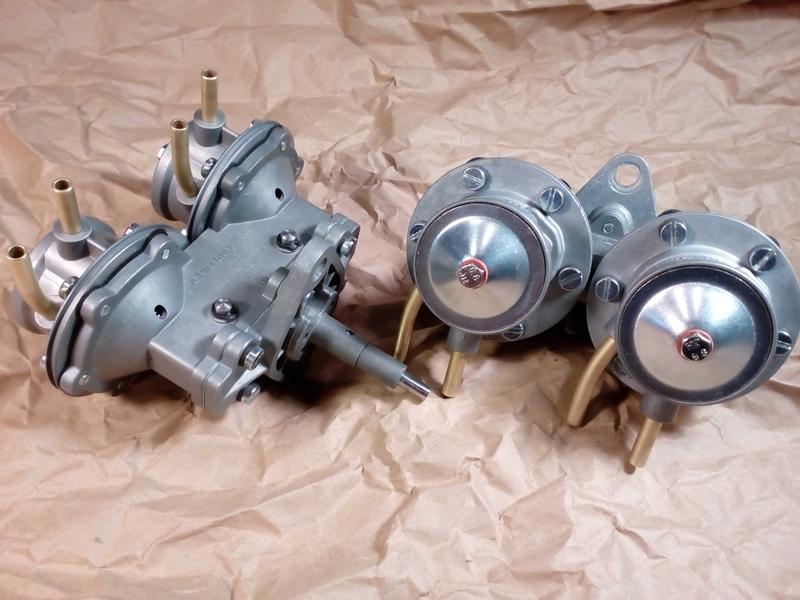
Recent Pix of rebuilt APG;
Early 911 Double sided fuel pumps
Porsche part # 901 108 401 00
Email request for this service.
E-mail
E-mail
E-mail
